
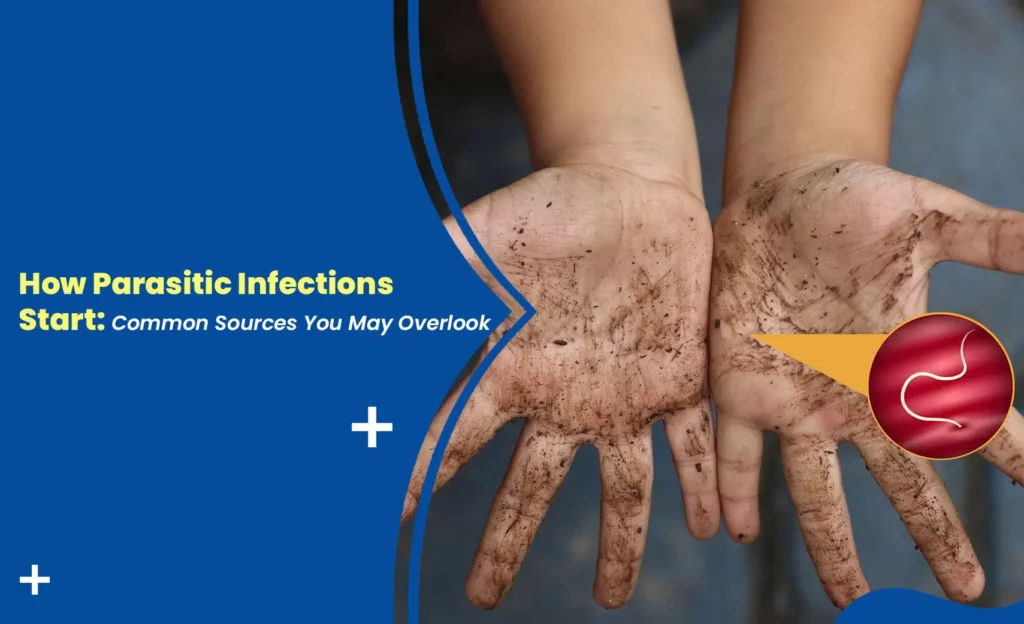
The truth is that most people don’t realize that parasitic infections occur more often than they do, and millions of people around the world are affected by them each year. Parasite transmission occurs in different countries, but these can occur anywhere, even in your kitchen, backyard, or swimming pool. As per the article of “Global impact of parasitic infections and the importance of parasite control,” it is estimated that a quarter of the world’s population is infected, which means 450 million are ill. The majority are children. It is important to know where and how parasites get into the human body so you can take steps to prevent yourself and your family from being infected or suffering from any related health issues.
What Are Parasitic Infections?
An organism that lives on or inside a host for the benefit of the parasite at the expense of the host. Human parasites are not only microscopic protozoa but visible worms as well, and they can impact the intestines, blood, skin, and even the brain in serious cases. When established, parasitic infections may produce anything from an upset stomach to quite serious, long-term disease if not treated.
It is difficult because the infection is usually asymptomatic and silent. Many people may be infested with parasites for several months, or even years, without realizing that the symptoms (such as fatigue, bloating, or skin irritation) are actually caused by the parasites.
Common Sources of Parasitic Infections You May Overlook
- Contaminated Food
One of the most common sources of foodborne parasites occurs when food is contaminated. Parasite eggs or larvae can be found in undercooked meat, raw fish, and unwashed fruits and vegetables.
- Undercooked pork (Risk of tapeworms).
- Undercooked or raw fish and sushi (possible risk of some roundworms).
- Fruits or vegetables that haven’t been washed after being grown in soil polluted with animal or human feces.
- Food prepared on the street in an unsanitary environment.
- Parasite eggs are not visible to the naked eye and can be present in seemingly pristine food products.
- Contaminated Water
Another significant overlooked source is waterborne parasites. In some areas, parasites such as Giardia and Cryptosporidium can be present in untreated lake, river, or well water or even in tap water that hasn’t been adequately filtered. Swimming pools that are poorly chlorinated or recreational lakes can provide a source of exposure, particularly for children who may ingest water while playing.
- Soil Contact
Skin-penetrating parasites such as hookworms can be introduced into the skin of unprotected people by walking on contaminated soil or by gardening without gloves or by children playing in soil where animals have excreted. One of the areas that is often overlooked is this aspect, as there is no real “trigger” moment. You can be infected (parasitic infections) if you have unprotected skin contact for a few minutes.
- Pets and Animals
Domestic animals, particularly dogs and cats, may transmit parasites to humans via contact with their feces, contaminated fur, or even flea bites. Owners will sometimes avoid deworming their dogs or cats because they don’t think that it affects the rest of the family.
- Poor Hand Hygiene
One of the most common and easiest ways intestinal parasites are transmitted from person to person is by not washing hands after using the restroom, before eating, or after handling raw food. In particular, in households, schools, and day care centers where close contact is common.
- Travel to Poorer Sanitation Regions
If you visit poorer sanitation areas, then you may lead to exposure to foodborne parasites and waterborne parasites. Facilities can be infected even during short trips where local food and water are consumed if appropriate steps are not taken.
- Insect Bites
Some of the parasites that cause diseases such as malaria or chagas disease are not spread through food or water but by the bite of an insect. Some parasites can infect the blood directly, without passing through the digestive system, through the bites of mosquitoes and other biting insects.
How Parasites Enter the Human Body
It is helpful to know the points of entry to get a sense of the importance of prevention. Parasites are usually introduced into the body through:
- In ingestion, when people consume contaminated food and water.
- In the case of skin penetration, larvae penetrate bare skin when in contact with contaminated soil or water.
- In insect bites, parasites are carried by mosquitoes, sandflies, or other vectors in the bloodstream.
- Handling by a person, particularly by the fecal-oral route (when hygiene is not good).
In the interior, parasites can locate in the intestines and/or spread to other organs or to the blood.
Signs You Might Have a Parasitic Infection
Although a diagnosis will always be made by a healthcare professional, some symptoms include ongoing digestive problems, weight loss, fatigue, skin rashes or itching, and sleeping difficulties. These symptoms are similar to many illnesses, so laboratory tests are the best way to confirm a parasitic infection.
Parasite Prevention: Self-care
You may adopt some habits, such as washing hands before eating and after using the restroom. You prepare meat and cook it properly at the right temperature. You always wear shoes when you walk on soil, grass, and sand. You should not eat vegetables or fruit directly after buying. These should be cleaned by water. You take care of your pet. You adopt a deworming plan and keep the hygiene of your pet’s house to reduce the risk of parasitic infections. You should avoid those areas, which are already infected areas.
Treatment Options
If an infection is found to be caused by a parasite, treatment is usually with an appropriate anti-parasitic medicine according to the type of parasite. Healthcare providers might consider Iverjohn 12 mg (which contains ivermectin) for certain types of parasites because ivermectin works on many different intestinal and skin parasites.
Nevertheless, the dosage of Iverjohn or other drugs is different depending on the medical history of the affected people, the type of parasite it is, and their other health conditions. This is not a decision to make by yourself. You must diagnose and find the correct dose with the help of a healthcare provider.
Brief To Conclude
Parasitic infections start from unhygienic restaurants where you eat or from a splash in a lake in the summer. You may experience parasitic infections in the garden. You should find out the areas from where infection spreads. The antiparasitic medicine, such as Iverjohn 12 mg, works by paralyzing and killing parasites or stopping their reproduction. You may adopt prevention plans after consulting with a healthcare provider. It helps to secure your health and your family members too. We recommend you, if you are suffering from these types of infections, seek medical advice rather than self-treatment.
FAQs
1. How do you know if you have intestinal parasites?
You see some symptoms such as bloating, issues in the digestive system, and weight loss; that means you have intestinal parasites. Moreover, you experience unexpected fatigue.
2. Can parasitic infections go away on their own?
If you suffer with mild infections, they may be cured by themselves. But if you suffer from severe infections, you should consult with a healthcare provider for treatment.
3. Is tap water safe from waterborne parasites?
Tap water can be safe or not. It depends on cleanness. If areas are dirty or unhygienic, waterborne parasites can stay in tap water.
4. Can you get parasites from your pet?
Yes, you can get parasites from your pet. You should maintain good hygiene at your home and adopt veterinary deworming to safe yourself and your pet also.
5. What is Iverjohn 12 mg used for?
Iverjohn 12 mg is a pharmaceutical drug. This medicine is used for the treatment of various parasitic infections such as strongyloidiasis, onchocerciasis, and scabies.