
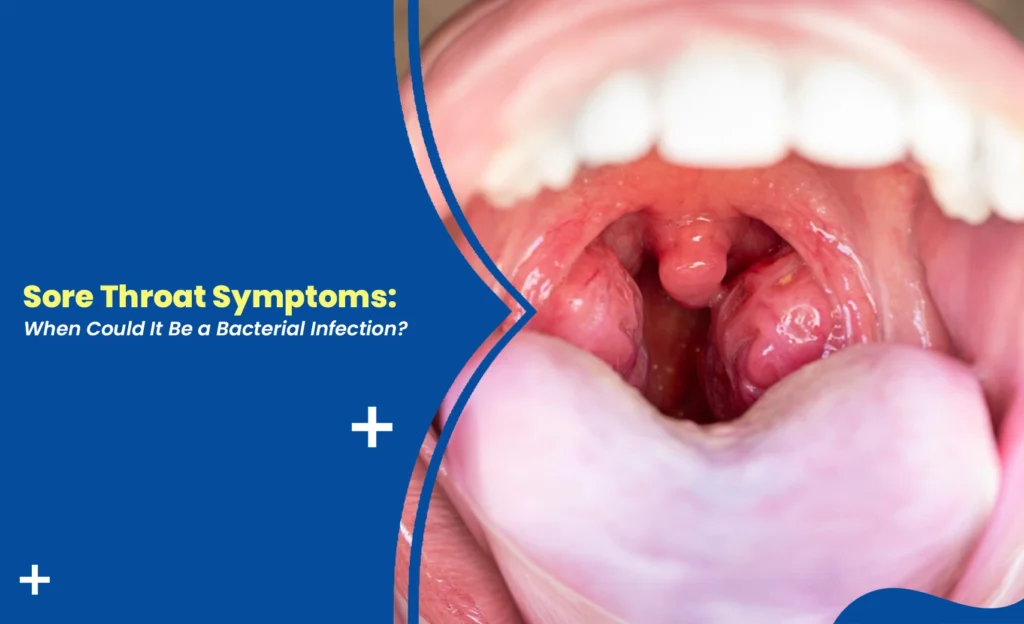
One of the most frequent complaints that several individuals have is about having a sore throat, and it’s usually resolved within a couple of days. However, although the majority are viral, a significant portion are bacterial and must be treated with a completely different approach; not all sore throats are created equal. You’ll save yourself from needless discomfort, prevent complications, and avoid taking unnecessary antibiotics by knowing when your sore throat could be due to a bacterial infection.
Now the question is how common a sore throat is. Sore throats are a huge health service problem around the world. According to U.S. health care data, sore throat is one of the most common complaints in primary care, with an estimated 120 million medical visits annually in the U.S. The global situation is equally astounding. An estimated 616,000,000 new cases of group streptococcal pharyngitis occur worldwide each year.
Although sore throats are common, most sore throat cases are not caused by bacteria. This is significant, because treatment and antibiotic requirements will depend entirely on the underlying cause.
Bacterial Throat Infection vs. Viral Sore Throat: What the Numbers Show
A sore throat can be caused by either a virus or bacteria, but how many sore throats are true bacterial throat infections? According to the numbers, the situation is not too dissimilar in the key medical sources:
- Strep throat accounts for about 30% of sore throats in children and 5% to 15% of sore throats in adults, per Johns Hopkins Medicine.
- Group A Streptococcus causes 20-30% of sore throats in children and 5-15% of sore throats in adults.
- In children the research indicates that about 15-40% of sore throats in kids between 5 and 15 years of age are caused by strep bacteria.
- While a review from StatPearls (NIH) states that only about 10% to 15% of adults who present to a physician for a sore throat have streptococcal pharyngitis, many hundreds of thousands of adults are recommended antibiotics for the condition.
According to the Centers for Disease Control and Prevention (CDC) surveillance data, strep throat is the cause of 5.2 million outpatient visits per year in the U.S. among people under 65, and 2.8 million antibiotic prescriptions per year are for strep throat. The disparity between bacterial cases and antibiotic use is indicative of the high number of sore throats that are being treated with antibiotics without any confirmed bacterial cause and how important it is to correctly identify symptoms and, when possible, test them.
What Is Pharyngitis?
Pharyngitis is the medical word for inflammation of the back of the throat (pharynx). The pharyngitis symptoms may be caused by a virus or a bacterium, and sometimes symptoms can be so similar that it is really hard to distinguish the symptoms from the two causes. This is one of the reasons healthcare providers do not solely depend on guesswork when making a diagnosis.
Symptoms of Bacterial Sore Throat
Overlap does occur, but there are certain patterns that favor a more likely bacterial origin. Some signs and symptoms of a bacterial sore throat are the following:
- Throat pain that comes on suddenly and is severe rather than gradual
- Fever, often higher than 101°F (38.3°C)
- Enlarged tonsils, which may have white/yellow patches or pus.
- Swollen and tender lumps in the neck area.
- Pain when swallowing
- Headache
- Gastroesophageal reflux and NVD (nausea, stomach pain, or vomiting). This symptom is more common in children.
- No cough, congestion, or runny nose.
One noteworthy symptom is that strep throat is not usually accompanied by cough, which is more likely to be related to a viral cause.
How to Know If a Sore Throat Is Bacterial
The presence of symptoms may not be definitive, so it is important to know the signs of bacterial versus non-bacterial sore throat and to use testing when necessary to diagnose the condition. Scoring systems, like the Centor criteria, which take into account things like fever, swollen tonsils, absence of cough, and enlarged lymph nodes, are often used to help healthcare providers determine the risk of a bacterial cause. But it was found that these scoring systems are not infallible, and that even if they are positive, the likelihood of having a streptococcal infection is about 25% to 50%. This is why it is often recommended that laboratory confirmation take place prior to antibiotic use, as per the study published through NCBI.
The two most common confirmatory tests are the following:
- Rapid strep test is used to give results within minutes and is approximately 98% specific, but only about 70% sensitive.
- Throat culture is the preferred method because it is very sensitive (90% – 95%) but takes longer to get results, as it involves a laboratory process in which the sample is cultured.
When Does a Sore Throat Need Antibiotics?
One of the frequently asked questions: When is a sore throat a reason for antibiotic treatment? Antibiotics are only appropriate when a bacterial cause is confirmed or strongly suspected (usually due to clinical criteria and ideally by testing) and is most likely group A Streptococcus. Antibiotics aren’t effective for viral sore throats, and they’re likely to improve on their own in a week or two.
But there is evidence that overprescribing is still a problem. At least 60% to 70% of sore throat consultations led to a recommendation of antibiotics, although most were viral. This mismatch between prescribing and the prevalence of bacterial infections is a global issue of antibiotic use and resistance.
Sore Throat Treatment: Bacterial vs. Viral
Treatment for a sore throat will largely depend on the cause of the sore throat. Treatment for a viral sore throat is mostly symptomatic:
- Rest and adequate hydration
- Warm saltwater gargles
- Throat lozenges/sprays
- To decrease fever and discomfort, use over-the-counter pain relievers.
- Humidified air to alleviate throat irritation
Antibiotic treatment is the standard treatment for confirmed bacterial infections of the throat because it helps to cure the infection, decrease the risk of other serious complications (such as rheumatic fever), and shorten the run of the disease and its contagious period.
Antibiotics for Sore Throat: Azithromycin 250 mg as a Treatment Option
Healthcare providers recommend antibiotics for a sore throat to cure a bacterial infection. The dose depends on the patient’s medical history, allergic reactions, and the body’s resistance power. Azithromycin 250 mg Tablets (Sandoz) are a good option for the patients who are allergic to penicillin-based antibiotics. This medicine is used for treating strep throat. Azithromycin inhibits bacterial protein synthesis, which is how it stops bacteria from being active. This also helps your immune system to fight infection. It is recommended to take one tablet daily. Dose can be varied as per the patient’s health condition. It is advised that individuals shouldn’t suddenly stop taking the medication.
In A Nutshell
Sore throats are viral infections, and these cure after consuming the right antibiotics. Children are more often infected with bacteria compared to adults. Infected people need proper diagnosis and treatment. This blog analyzes causes, identifies key symptoms, and seeks further treatment. The combination of supportive care and recommended antibiotics such as Azithromycin 250 mg tablets (Sandoz) can help cure sore throats.
FAQs
1. What are the causes of a sore throat?
A sore throat’s causes are viral infections, bacterial infections, and environmental irritants.
2. What are the key symptoms that suggest a bacterial sore throat?
Key symptoms are high fever, pain in the throat, issues in the tonsil, seeing white or yellow patches on the tonsil’s upper area, and cough.
3. Can a sore throat be bacterial without a fever?
It is a common indication that if you have a fever, that means there is a high chance of bacterial infection. It is recommended to do a medical test after consulting with a healthcare provider.
4. Is Azithromycin 250 mg effective for treating bacterial sore throat?
Yes, Azithromycin 250 mg is used to treat bacterial sore throats. If patients have an allergy to penicillin, they are advised to visit the nearest clinic for treatment.
5. Why shouldn’t you take antibiotics for every sore throat?
Most sore throats are caused by viral infection. The cases of bacterial infection are lower compared to viral infections. It is advised not to take antibiotics unnecessarily since that can result in resistance to them.