
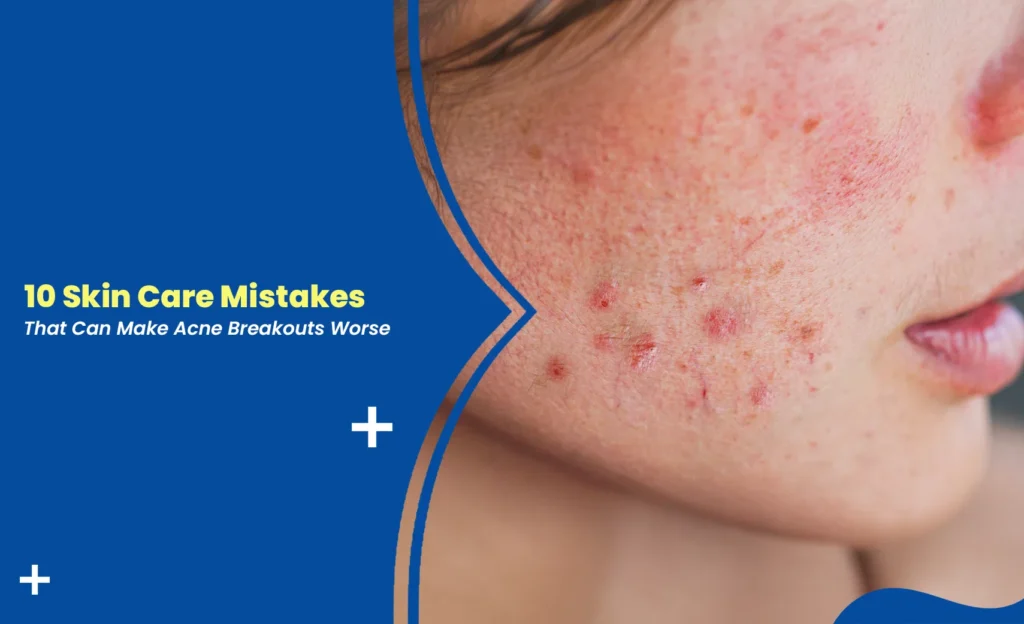
Your skin should be calmed, not worsened, by a good skin care routine, yet many individuals will unwittingly engage in skin care activities that will aggravate and not necessarily help their acne. You’ve been doing the right things but still getting breakouts; maybe it’s not the fact that you’re not doing enough but that you are committing some common mistakes. We’ve identified the top 10 skincare missteps, explained why they are ineffective, how you can get on the right track, and when it might be time to turn to a more specific acne treatment.
Why Acne Breakouts Keep Happening
It helps to know the reasons for acne breakouts before examining specific acne mistakes. First, it’s important to understand why acne breakouts continue to occur in the first place. Acne is caused by excess oil, dead skin cells, and bacteria clogging up hair follicles. It is much easier for individuals with acne-prone skin to go through this process because it is facilitated by genetics, hormonal fluctuations, and skin type. Introducing a skin care routine that exacerbates your acne and inflammation can turn breakout problems into a repeating cycle of frustration instead of a sporadic annoyance.
Mistake 1: Over-Washing Your Face
This would seem sensible, as increased washing should keep oily skin and acne controlled, but over-washing removes the natural oils from the skin. The skin then counteracts by secreting even more oil, leading to acne. Excessive face washing can lead to an imbalance of the skin barrier and cause further irritation.
Mistake 2: Using Harsh, Drying Products
People often try to use a strong astringent or high concentration of an active ingredient to dry up blemishes as fast as possible. Some actives are actually beneficial, but overusing them or applying multiple at a time will cause damage to the skin barrier, making the skin more sensitive and more prone to breakouts, since it doesn’t have time to heal.
Mistake 3: Skipping Moisturizer
One misconception is that moisturizer will aggravate acne. In fact, you could end up with dry skin if you don’t use moisturizer, which leads to your skin producing more oil than usual to make up for the lack of skin oil, and that can cause more clogged pores and acne. The important point is to get a moisturizer that is not comedogenic and light and make sure to not skip the product.
Mistake 4: Picking or Popping Pimples
One of the worst skin acne habits is this one. The pressure of picking or popping can force bacteria and dirt into the skin, which can aggravate the inflammation and lead to scarring and may make a pimple worse, especially if it is a cystic acne lesion located deeper within the skin.
Mistake 5: Not Removing Makeup Before Bed
It is a well-known fact that makeup is a major cause of clogged pores. With makeup, sunscreen, and a daily smear of grime, combined with the natural oils produced during the night, it is far more likely for clogged pores and breakouts to occur, especially around the hairline, jaw, and forehead.
Mistake 6: Using Comedogenic Products
Not every skin care and make-up product is created equal. Some ingredients can clog pores and cause breakouts or be comedogenic. Heavy moisturizers, make-up, and sunscreen, even if you aren’t using them, can disrupt an otherwise effective skin care routine.
Mistake 7: Changing Products Too Frequently
It is easy to get in a rut by trying out many different brands of skin care products, looking for one that can be a quick fix. Whenever you add a new product to your routine, your skin takes time to get used to it, and if you change products too often, you may end up with more irritation and inflammation in the skin, which will make it difficult to see what is working or not.
Mistake 8: Not Changing Pillowcases and Phone Screens Regularly
Over time these oils, bacteria, and dead skin cells collect on everyday surfaces that come in contact with your face, such as pillowcases, phone screens, and makeup brushes. Failure to clean these frequently can mean that bacteria can re-invade the newly cleaned skin, causing continual outbreaks even if the routine is otherwise effective.
Mistake 9: Over-Exfoliating
Exfoliation can help slough off dead skin cells and help prevent clogged pores, but scrubbing too much or too intensely could compromise the skin barrier. This can cause more redness and irritation. Surprisingly, acne happens more because damaged skin can be more sensitive to irritation and bacteria.
Mistake 10: Ignoring Severe or Persistent Acne
The most common error is to only use over-the-counter products if acne is severe and painful and when it fails to clear. Topical treatments are usually not as effective for treating significant acne, particularly cystic acne, and if not treated effectively, can cause scarring. It’s time to visit the dermatologist and not continue with a routine that isn’t working. It is a crucial component in long-term skin protection.
Best Skin Care Routine for Acne-Prone Skin
There are a few things that are beneficial to keep in mind when creating the best skincare routine for acne prone skin after working through these common mistakes:
- Use a non-irritating cleanser twice a day to cleanse gently.
- Apply a light, non-comedogenic moisturizer to your skin every day.
- Apply targeted actives (e.g., salicylic acid, benzoyl peroxide, or tretinoin) in moderation, introducing them progressively
- Use a non-comedogenic sun tan lotion each morning
- Limit touching your face during the day
- Replace pillow cases every week and wipe down phones frequently.
- Be patient, as you will not see results in a week, and most routines require 4-6 weeks.
Acne breakouts can be prevented by following these simple steps.
How to Prevent Acne Breakouts
- If you tend to get acne at the top of your head, try to keep the hair products at a distance from the hairline.
- Avoid touching your face with your dirty hands.
- Manage stress.
- Adopt a stress management plan.
- Drink plenty of water and eat well-balanced meals, as there is some evidence that eating high-glycemic foods can worsen acne.
- If acne treatment is not enough, then you will need to look into other options.
When Acne Treatment Needs to Go Beyond Skin Care
One of these is Accufine 20 mg Capsule (isotretinoin), which is usually only recommended for moderate to severe acne that doesn’t improve with other treatments, such as topical retinoids, antibiotics, or benzoyl peroxide, and is especially for cystic or nodular acne. One of the main causes of clogged pores and that stubborn acne is the reduction in oil gland size and output that isotretinoin provides.
Accufine is a strong systemic drug and should only be recommended and supervised by a dermatologist. Regular blood tests, monitoring for side effects, and thorough precautions with sun exposure and (for women of childbearing age) contraception are common, and isotretinoin can cause serious birth defects if used during pregnancy. It can’t be used as a first line or home treatment. It’s used when a dermatologist decides that the benefits of using it outweigh the risks after other treatments have been tried.
If you have acne that is quite extensive, is cystic, is leaving scars, or is having an impact on your confidence and life, it may be a good time to discuss its treatment with a dermatologist such as Accufine 20 mg.
Summing Up
It’s not just that you’re doing nothing right; there are minor things you are doing every day that are causing your breakouts. Taking that approach and avoiding these 10 common skin care pitfalls can make a positive difference over time for many individuals with acne. If you’re dealing with more serious or persistent outbreaks, don’t despair; seek expert advice: Products such as Accufine 20 mg Capsule, which can be recommended and monitored by a dermatologist, can provide tangible relief when other options have failed.
FAQ
1. Can overwashing my face actually make acne worse?
Yes. If you wash your face too much, you are also removing oils that your skin needs to protect itself and may end up producing more in response to keep your skin from drying out, leading to more breakouts.
2. Should pimples be popped or picked?
No. You don’t pick or pop pimples. It leads scars and causes inflammation
3. Why do you still get acne even though you follow a skin care routine?
Acne occurs despite following a skincare routine because of using chemical products, using old bed pillowcases, or changing face products too often.
4. What is Accufine 20 mg?
This is recommended for cystic or nodular acne that doesn’t improve with other treatments.
5. When can a skin care routine take to working?
It can take a minimum of four to six weeks of regular application to see real improvement in a skin care routine, so don’t give up, and don’t judge if it isn’t working.