
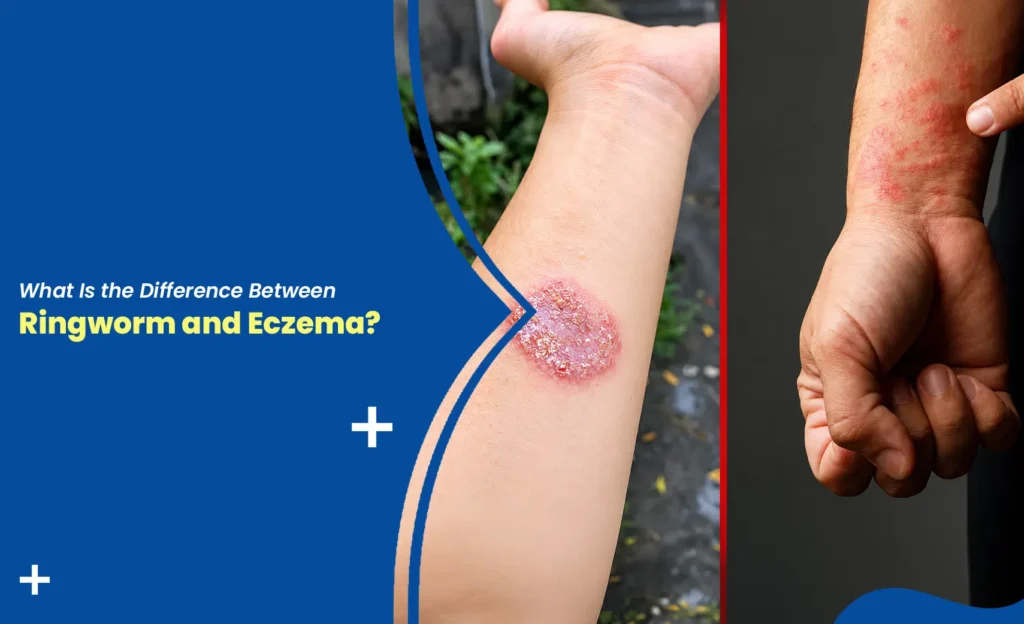
An itchy, red patch on your skin can be pretty scary, and it is super normal to ask yourself, is this fungal stuff, or is it some long-term inflammation thing? Ringworm and eczema can look close at first, so people mix them up. Then they end up doing the wrong care, which is annoying, sometimes even worse. You have to identify ringworm vs eczema, because one thing is contagious and the other…. more of a “manage it” situation, and that changes what you should do next. This blog basically walks through the difference between ringworm and eczema, like how they look, why they occur, and how they are diagnosed and handled.
Ringworm and Eczema: A Quick Overview
Ringworm has no connection with worms or parasites. This is a fungal skin infection caused by dermatophytes, those fungi that munch on keratin in the skin, hair, and nails. Eczema, aka atopic dermatitis, is more like a chronic condition driven by the immune system acting too strong, and the skin barrier is weaker than it should be.
Ringworm Symptoms and Ringworm Appearance on Skin
Ringworm symptoms usually start as a small scaly red spot, then it grows outward, like it’s creeping. the “classic” ringworm look is an itchy circular skin rash, with a raised border that is pretty clear and a center that looks lighter and clearer, so you get this ring vibe. The edge is often scaly or slightly bumpy, and the patch may slowly expand over days or weeks.
Eczema Symptoms and Skin Patches
Eczema tends to look less sharply outlined. The patches are often dry, rough, red, or brownish-gray, and the itch can be intense. Sometimes you’ll see small raised bumps that may ooze or crust if you’ve scratched. Instead of a neat ring shape, eczema borders are usually blurry and uneven. Eczema skin patches commonly show up in elbow and knee creases and on hands, neck, face, and even eyelids. It often affects both sides of the body, symmetrically. Longer-term scratching can make the skin thicker; this is called lichenification, and yeah, the itch is often worse at night and comes and goes in cycles.
Ringworm Causes and Transmission
Ringworm causes are pretty straightforward: dermatophyte fungi that like warm, damp places. Ringworm transmission occurs through skin-to-skin contact with an infected person, contact with infected animals like cats and dogs, and touching contaminated stuff, towels, combs, clothing, gym mats, locker-room floors, all that. Farm animals can carry it too, so cattle and similar animals are a thing. Because it spreads easily, ringworm is one of the most common contagious skin conditions, especially in kids, athletes, and anyone sharing close spaces.
Eczema Causes and Triggers
Eczema isn’t an infection, so eczema causes are different. Genetics and immune system activity play a role, as does a compromised skin barrier, and many people with eczema also have asthma or hay fever, or a family history of those. Since the skin barrier holds onto moisture less well, irritants and allergens can slip in easier. Common eczema triggers include harsh soaps and detergents, fragrances, wool and synthetic fabrics, dry air, temperature swings, sweat, stress, dust mites, pet dander, and sometimes certain foods for some individuals.
Ringworm and Eczema: Contagious vs Non-Contagious Skin Conditions
This part is one of the most practical clues. Ringworm is contagious, and it can spread to other parts of your own body too and to other people, so hygiene and early treatment are big. Eczema is not contagious, though an open, scratched eczema patch can get infected with bacteria, which is a separate complication. If you can sort out which category your rash falls into regarding ringworm and eczema. It helps you decide stuff like whether to keep towels separate, avoid shared equipment, or check pets.
How to Identify Ringworm vs How to Identify Eczema
If you’re trying to identify ringworm and eczema, you will see ringworm look for that defined expanding ring, with a scaly, raised edge and a clearer center, usually limited to one area and often more on one side. To identify eczema, look for dry patches with blurry edges in common areas like skin folds, often symmetrical, and with a history of recurring itchy skin, allergies, or sensitivity. Another clue regarding ringworm and eczema is behavior over time. Ringworm usually keeps expanding until it’s treated, while eczema flares up with triggers and then fades, often returning in the same locations. Still, not everything reads like a textbook. Ringworm can be atypical, especially if someone has already used a steroid cream, because steroids can hide the ring pattern and allow the fungal infection to keep going. So guessing is risky, not just annoying.
Ringworm Diagnosis and Eczema Diagnosis
Ringworm diagnosis usually starts with a visual exam; then healthcare providers may confirm by scraping a bit of skin and checking it under a microscope or sending it out for fungal culture. That can separate fungal causes from other possibilities fairly quickly. Eczema diagnosis is usually clinical, based on what you report, how the rash looks, where it is, your personal and family allergy history, and how the rash flares and settles. Sometimes, healthcare providers use patch testing if allergic contact dermatitis is suspected, or they take a sample to rule out other things. The big deal is treatment direction: antifungals help ringworm, while corticosteroids often used for eczema can make a fungal infection worse.
Ringworm Treatment Options
Ringworm treatment options really depend on where the infection is, like on the body vs scalp and nails. For mild cases on the skin, people usually start with over the counter or antifungal creams, lotions, or powders. These tend to get used for several weeks, even if the rash looks a lot better, because it can linger. But scalp and nail ringworm, or stuff that’s widespread and stubborn, often needs oral antifungal medication like Canditral 200 mg Capsule, usually something a healthcare provider recommends. Also keep the area clean and dry, and make sure you wash bedding and clothing using hot water, because that helps stop re-infection happening again and again.
How to Prevent Ringworm Infections: If you want to prevent ringworm infections, the biggest thing is keeping skin clean and dry, especially in folds and places like between toes. If you’ve got pets, have them checked by a vet if you spot bald, flaky, or scaly patches. And wash your hands after you handle animals, just in case.
Eczema Management
Eczema doesn’t have a true cure, though eczema management can keep things pretty under control. The core of it is steady moisturizing with fragrance free emollients. Ideally you put it on right after bathing, so the hydration gets locked in. Then you try to identify personal triggers and avoid them, use mild cleansers, take short lukewarm showers, and wear soft breathable fabrics. During eczema flare-ups, dermatologists sometimes recommend Canditral 200 mg Capsule. And stress management ends up mattering for many people too.
Ringworm and Eczema: When to See a Dermatologist
You have to know when to see a dermatologist, which can save you weeks of frustration. Get medical advice if a rash keeps spreading and doesn’t get better after about a couple weeks of over the counter treatment, hits the scalp or nails, or covers a big area. Also get checked right away if skin irritation and inflammation seem to turn into infection, like pus shows up, warmth or swelling increases, or fever happens. If itching is disrupting your sleep, that’s another good reason to seek help. And if you’re not sure you’re dealing with a fungal rash vs eczema, a professional diagnosis is the safest route.
To Conclude
Ringworm and eczema can both lead to itchy, irritated skin, but they’re totally different situations, and they require different solutions. Ringworm is a contagious fungal infection, often with a ring-shaped expanding rash that improves with antifungal treatment. Eczema is a noncontagious chronic inflammatory condition, usually showing up as dry, blurry patches that flare with triggers, and it’s managed with moisturizing and trigger avoidance. So when in doubt, pause before you start treatment, because the wrong cream can make things worse, rather than better.
FAQs
1. What are ringworm and eczema?
Ringworm and eczema create itchy red patches on the skin. Both are skin related diseases.
2. Where does ringworm show up?
Ringworm can show up on the body, scalp, feet (athlete’s foot), groin (jock itch), and nails. If it’s on the scalp, you might see patchy hair loss with flaky areas, and sometimes people notice it on one side more, not always in a neat even pattern.
3. Is eczema a non-contagious?
Yes, eczema is generally non-contagious, so you can’t really “catch” it from someone, and you can’t pass it to someone else. When triggers hit, flare-ups happen, and then things calm down.
4. How do you prevent ringworm infections?
Don’t share towels, combs, hats, or clothing. In public showers and locker rooms, wear sandals, change socks and underwear daily, and shower after sports or gym sessions.
5. What is Canditral 200 mg Capsule?
Canditral 200 mg is used to treat serious fungal and yeast infections. It is specifically beneficial for infections that can’t be treated by over-the-counter creams or ointments. The active ingredient present in the medication is Itraconazole.