
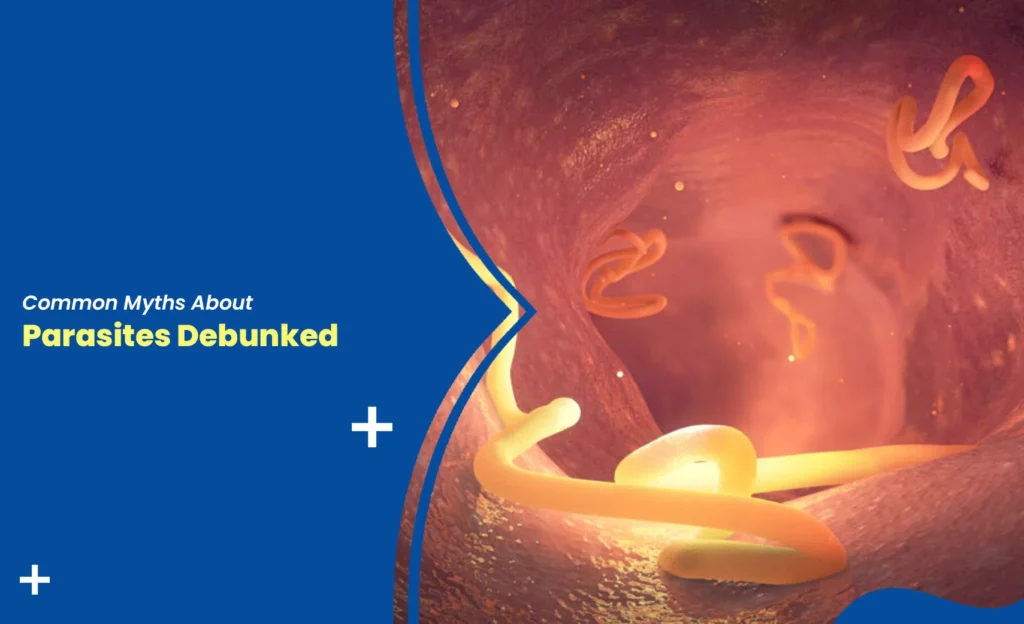
I remember sitting on my couch at like 11 pm, scrolling through my phone, trying to figure out why I felt so off. You know that feeling? Not sick exactly. Just… not right. Tired all the time. My stomach feels weird after eating things that never used to bother me. And this random itchiness that came and went.
I didn’t say anything to anyone because, honestly? Who wants to be the person who goes, “Hey,
I think I might have parasites”?
That sounds crazy, right? Like something from a horror movie. Or something that only happens to people who drink river water in the jungle.
But here is the thing. That is exactly the kind of thinking that keeps us from dealing with reality.
So let us actually talk about it.
Myth 1: Only Unhygienic People Get Parasites.
I’ll say this plainly, this one does the most damage.
The truth about parasites is that they don’t care about your income, your neighborhood, or how often you mop your floors. Parasite infections happen to people who eat at fancy restaurants. To kids in good schools. To adults who wash their hands religiously.
You can pick up a parasite from unwashed produce. From a pet. From a swimming pool. From a handshake, technically. It’s not a hygiene failure. It’s just… life. Organisms exist. They find hosts. That’s literally their whole job.
The stigma around this stops people from getting treated. And that’s where the real harm is.
Myth 2: You’ll always know if you have one.
People imagine dramatic symptoms. Writhing, intense pain, visible signs. But a lot of the time? It’s quiet. Fatigue you chalk up to stress. A bit of bloating you blame on your diet. Mild stomach aches that come and go.
This is one of those common parasite misconceptions that genuinely delays treatment for months, sometimes longer.
Some parasites live in your gut for a long time without making a huge scene. You feel vaguely not yourself. Not sick enough to go to a doctor. Just… off.
Not sure if that makes sense, but it is like a slow leak. You do not notice until the tire’s already flat.
Myth 3: Only kids get parasites.
I used to believe this one completely. Because you always hear about kids getting dewormed. Schools, parents, reminders, all that.
Adults? Not so much.
But adults are just as exposed. Probably more, actually. Eating out more. Traveling. Trying random street food because it smells amazing. Parasite myths and facts around age make adults less likely even to consider the possibility when they’re symptomatic, which means longer delays in diagnosis.
And this is where people don’t always think about it. We outgrow the awareness, not the risk.
Myth 4: Parasites Are Only a Problem in Developing Countries.
Okay, this one really needs to go.
Yes, certain environments make transmission easier. Yes, access to clean water matters. But parasite infection myths around geography give people in urban, “developed” settings a false sense of immunity.
Pinworms are one of the most common infections in the world. They show up in schools, daycares, and households across every continent. Geography isn’t a protection. It’s just a story we tell ourselves.
Myth 5: It’ll Just Go Away On Its Own.
Sometimes people discover they have a parasite and then… wait. Hope it resolves. Maybe take some probiotic supplements and see what happens.
Here’s the thing that’s usually not how it works.
Parasites are not a cold. They don’t always clear on their own. In fact, some of them can multiply in your gut, and the longer you wait, the worse the symptoms can get. I’m not trying to scare anyone. But this is just an honest parasite awareness facts: treatment works better, faster, and it’s usually simple.
Which brings me to something worth mentioning, Mebex 100 mg. It is a mebendazole tablet that basically works by cutting off the parasite’s ability to absorb nutrients. It dies.
Myth 6: Treatment is complicated and scary.
Okay, this one stopped me from even thinking about doing anything. Because I imagined long treatments, weird side effects, and complicated routines.
But honestly… Not always
There are simple treatments out there. I came across Mebex 100 mg at one point, just something people commonly use when dealing with certain parasitic infections. Nothing dramatic. Just straightforward.
And I remember thinking… “That is it?”
Sometimes we build things up in our heads way more than they actually are.
Myth 7: Parasites are rare.
They’re not rare.
They’re just… not talked about.
That’s the difference.
People don’t casually bring it up in conversation. So it feels uncommon.
But once you start reading or asking around, you realize it’s more common than you thought.
This is where many common parasite misconceptions come from silence.
Myth 8: You Should Just Ignore it unless it gets bad.
I get why people do this.
You don’t want to overreact. You don’t want to Google symptoms and spiral. You tell yourself it’s nothing.
I’ve done that too.
But ignoring things doesn’t make them disappear. It just delays dealing with them.
And sometimes that delay makes things more annoying than they needed to be.
What Actually Helps.
Here is what I’d tell a friend, genuinely:
If you have had unexplained stomach issues for more than a couple of weeks, bring it up with your doctor.
Wash fruits and vegetables properly. Not just a quick rinse under cold water.
If someone in your house is diagnosed, everyone in the household usually needs to be checked or treated. Parasites are generous like that.
Don’t self-diagnose off the internet at 2 am.
Low-drama treatment exists. It’s accessible.
A Small Safety Note.
If you’re considering Mebex 100 mg, please get an actual diagnosis first. Medication works best when it’s targeted. A doctor can confirm what type of parasite you’re dealing with, which matters.
It’s not recommended during pregnancy without medical supervision, and the dosage for children varies. That’s not fear-mongering, it’s just the kind of thing you’d want a friend to tell you before you bought it off the shelf.
FAQ’s
Can I get a parasite just from eating salad?
Yes, if the vegetables weren’t washed properly or were handled with contaminated water. It’s not common, but it happens more than people expect.
Can adults get parasites easily?
Yes. The idea that it’s just a “kids’ problem” is one of the biggest myths about parasitic infections.
How do I know if I need Mebex 100 mg?
You don’t know. That’s the annoying answer. You need a stool test. Some doctors will prescribe it based on symptoms if you’ve traveled somewhere risky, but generally? Test first. Don’t guess.
Are parasites more common in kids?
Yeah, because kids put everything in their mouths and don’t wash their hands well. Pinworms are super common in young kids. Suppose your kid is scratching their butt at night. Yes. You know.
Is it possible to get reinfected after treatment?
Absolutely. Treatment clears the current infection, but it doesn’t make you immune. Hygiene habits after treatment matter, such as washing hands, keeping nails short, and washing bed linen. Boring advice, but real.