
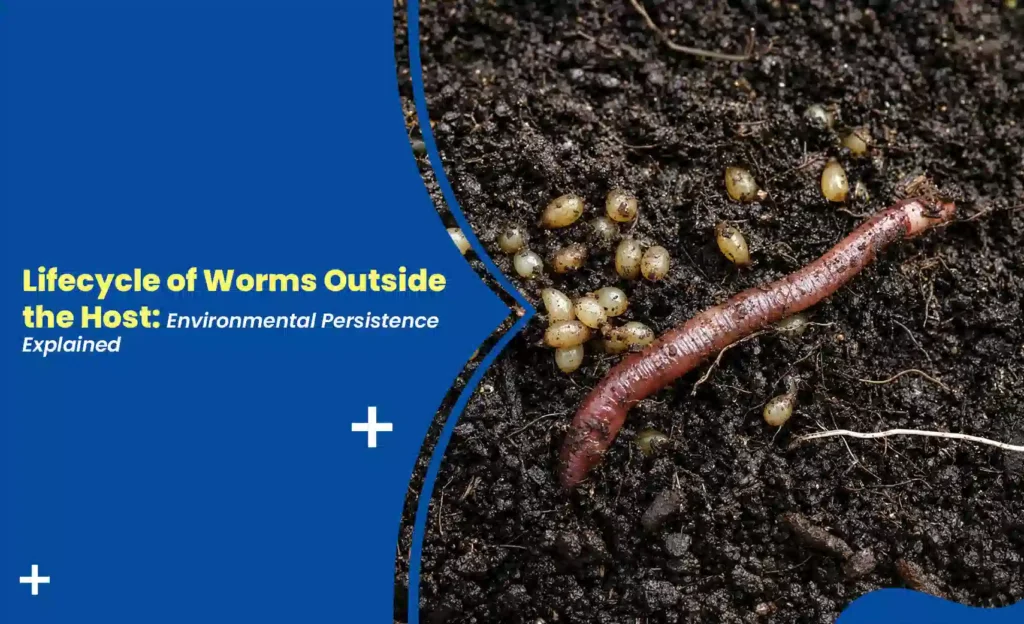
Typically, people think about parasitic worm infection when they face serious health issues. A great deal of the lifecycle of worms takes place outside of the body. The external environment is important for the survival, development, and infectivity of worms to a new host. The duration of infectivity of parasites is influenced greatly by soil, water, vegetation, moisture, and temperature. Your knowledge about this environmental stage enables you, as animal owners, farmers, or animal health professionals, to minimize the risk of infection and enhance disease management plans.
One key factor in the persistence of environmental infections in many millions of animals and humans around the world is the process of environmental persistence. It is important to realize that parasites don’t just go away after the host leaves; many have very sophisticated survival mechanisms which allow them to survive unfavourable conditions and propagate through the host.
Let’s Reveal the Lifecycle of Worms
The lifecycle of worms varies with the species of parasite, but most similar worms have several common stages:
- Egg stage
- Larval stage
- Infective stage
- Host entry
- Adult reproduction
- Shedding of eggs into the environment
Adult worms have a life cycle in the tissues or digestive tract of an infected host and shed eggs in the feces. After that, these eggs leave the body and enter their next developmental stage. Under the proper environmental conditions, eggs develop into larvae and later become infective.
This process plays a key role in the parasite life cycle. This allows the intestinal worm lifecycle to be passed from one host to the next.
In fact, if you consider the gastrointestinal worms that are very common in livestock, they will usually depend on the contamination of pasture. Larvae may be ingested and restart the infection cycle by grazing animals ingest contaminated grass.
Which Environment Becomes a Perfect Survival Zone?
Numerous parasites have evolved highly effective survival mechanisms that enable them to survive outside the host for long periods. Environmental persistence is related to many factors.
Temperature Conditions
Parasite survival is greatly affected by temperature. Egg development and larval growth will be accelerated in warm environments. Very hot temperatures create a threat to worm eggs, and these may rot. Very cold temperatures also inhibit growth for worms. But few worms can survive at cold temperatures for a long time.
Moisture and Humidity Levels
In worm survival outside host conditions, moisture is one of the most significant factors. Larvae are prone to rapid death in dry conditions since dry conditions cause harm to the larvae’s protective outer layers. Rainfall could also carry contamination to greater distances by transporting any infected material in the runoff water.
Soil Characteristics Matter
The persistence of parasites varies with soil type. Larvae cannot survive in dry soils. Clay soil holds moisture for a long time. This type of soil helps eggs and larvae to grow.
Worm Eggs in Environment: Tiny Structures Built for Survival
Worm’s eggs are sturdy and can resist external stress. Eggs are protected by shells from changing temperature, dry weather, chemical exposure, physical damage, and other factors. Under favorable conditions, some parasite eggs are able to survive for several months and even years. This durability is a very important factor in the worm transmission cycle in farming areas, grazing land, kennels, and areas of poor sanitation.
How Long Do Worms Live Outside the Body?
A question which is asked by many people who keep pets and livestock is: How Long Do Worms Live Outside the Body?
This depends on species and environmental conditions. The approximate times of environmental survival are:
- Surface Borers: Short-lived
- Roundworm eggs: Months to years
- Hookworm larvae: Several weeks
- Eggs of tapeworm: Weeks to months
- Whipworm eggs: Several years
- Strongyles larvae: Several weeks to months
The following timelines are only estimates and vary with moisture, temperature, and sanitation. Some parasites are known to survive for long periods, even after infected animals have been treated, so contaminated environments can continue to infect animals.
The Dangerous Worm Transmission Cycle
Eggs are excreted from infected hosts into the environment. These eggs hatch under optimum conditions. Larvae are ultimately infective and contaminants of grass, water, food, or surfaces.
- Eating contaminated food
- Drinking contaminated water
- Feeding on contaminated grazing.
- When larvae penetrate the skin.
Common Parasitic Worms and Their Environmental Strategies
Roundworms lay large numbers of very resistant eggs, which can survive in soil for long periods. They are highly protective and are an important source of long-lasting environmental contamination.
Larvae of hookworms grow in wet soil, and they are capable of actively invading the skin. Often, these parasites are acquired directly from the environment.
Tapeworms need an intermediate host, like a flea or other organism, before they mature.
Whipworm eggs have thick shells, which enable them to survive for a long time in the outside environment.
Reproduction: Why Do Worm Populations Grow So Quickly?
The worm reproduction cycle is a description of why an infection can be so fast with worms. Eggs may be laid in very large numbers by the females each day. Some species can lay thousands of eggs each day, which results in significant environmental contamination.
Spread is rapid if there are several things:
- High egg production
- Egg survival is very good.
- Fast larval development
- Multiple transmission routes
- Capability of infecting a variety of hosts.
Due to these reproductive benefits, relatively few untreated infections can result in significant contamination.
How Do Fenbendazole Capsules 444mg Help Interrupt the Cycle?
The control of environmental contamination can only be achieved if infections within the host are also controlled. Fenbendazole capsules 444mg are an antiparasitic medicine for treating some worm infestations in animals. Fenbendazole is in a group of medicines called antiparasitic agents. This action makes the worm weak and kills it, thereby reducing the number of parasites in the body.
Normally, you can give this medication to your animal once a day for 3 to 5 days, as per the health condition. Your goat and sheep take 5mg/kg body weight (as a single dose). Your horse and cattle take 7.5mg/kg body weight (as a single dose).
Potential benefits include:
- Suppresses populations of intestinal parasites.
- Can be useful in parasite management programs.
- Helps to minimize worm excretion
- May be used in wider deworming programs as needed
- Helps to control the pollution of the environment
But dosage and veterinary advice are still relevant as the dose requirements differ among species, body weight, severity of infection, and treatment objectives.
Often, medication is not sufficient. Treatment should be accompanied by environmental control measures for better results.
Strategies: Worm Infection Prevention (WIP)
You may adopt WIP to protect your animals and stop the lifecycle of worms. You should remove fecal matter from your animals’ living areas daily. You do not give food and drinking water in contaminated bowls and on contaminated surfaces. Daily cleaning will definitely help your animals to live longer. You should keep your infected animals separately from non-infected animals.
The Bottom Line: Breaking the Invisible Cycle
The lifecycle of worms occurs in a host’s body. Environmental contamination is the best zone for worms to survive and spread. The worm survival outside the host shows why infection happens and how it can be spread quickly. Cleaning and prevention plans help your animals save. However, Fenbendazole capsules 444mg break the transmission cycle and reduce risk factors.
FAQs
- Will the eggs of worms be alive outside of a host for a long time?
Yes. Some worms (for example, whipworms) are alive in wet soils and moist areas for months/years.
- Do animals get contaminated from grass?
Yes. Larvae eat grass and stay a long time in the grass. This is the cause of infection.
- How does Fenbendazole 444 mg help my animal?
You should consult with your doctor before giving this medication to your animals. This brakes transmission cycle to reduce the spread of worms and infections.
- Will WIP save my animals?
Noo. This can reduce the level of contamination. When your animals suffer from worm infections, you should consult with your veterinarian for medication and the relevant prevention process.