
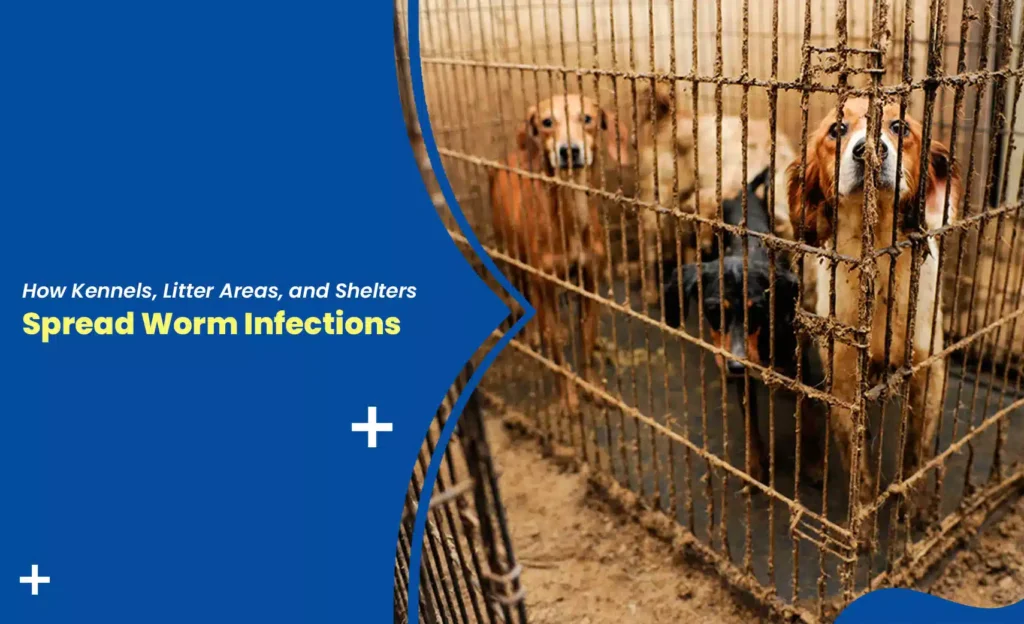
There’s something nobody really tells you when you adopt a dog from a shelter or board them at a kennel for the first time. You come back, and your dog seems fine, maybe a little tired. Then, a few weeks later, loose stools, weight loss, and a weird pot-bellied look. And you’re sitting there thinking, What happened?
Worm infections. That’s what happened.
It’s not dramatic. It doesn’t announce itself. It just quietly gets in.
Shelters Are Kind of a Perfect Storm for This
Think about it. Dozens of animals in close quarters. Different histories, different health backgrounds, and some strays picked up off the street. Nobody knows what they’re carrying when they arrive. And even if the shelter is clean and genuinely well-run, the sheer density of animals creates a situation where intestinal worms in pets can spread faster than staff can track.
Fecal matter is the main route. One infected dog uses a corner of the yard. Another dog sniffs it. Maybe steps in it. Licks their paw later. Done.
Roundworms, hookworms, whipworms, these aren’t rare edge cases. They’re everywhere in shelter environments. And the eggs from some of these worms survive in soil for months, sometimes longer. Cleaning the visible mess doesn’t kill the eggs. You’d need more than a mop for that.
The Litter Box Problem Nobody Talks About
Cats get overlooked in this conversation a lot. But shared litter areas in catteries, shelters, and multi-cat homes are honestly one of the most overlooked sources of worm transmission.
Toxocara cati, the roundworm that lives in cats, sheds eggs through feces. A shared litter tray means those eggs are sitting there, potentially being tracked around on paws, then groomed off. Mother cats pass larvae to kittens through milk. So you can have a whole litter infected before they’re even weaned.
And here’s where it gets a bit unsettling, some of these eggs can survive for a surprisingly long time outside a host. You clean the tray once a day and feel like you’ve handled it. But if the box isn’t disinfected properly, you haven’t really handled it.
Kennels Aren’t Just About Dirty Runs
People assume worm spread in kennels is about bad hygiene. Sometimes it is. But even decent kennels can have issues because the problem isn’t just filth, it’s contact.
Dogs interact. They share water bowls. They sniff the same spots. Infected soil tracked in from outdoor runs sits in indoor spaces. Roundworm and hookworm spread this way constantly. Hookworm larvae can actually penetrate skin, so a dog lying on contaminated ground is already at risk, regardless of whether they put anything in their mouth.
A deworming program for dogs and cats that’s inconsistently applied makes this worse. Some owners deworm before boarding. Most don’t. So you get a mix, some animals protected, others not, and the ones that aren’t protected become both victims and vectors.
Wormchrist 500 mg is one of the treatments that comes up in veterinary contexts for managing these infections. It’s typically used post-exposure, once there’s a confirmed or suspected infection, and the broad-spectrum action is what makes it useful for mixed-worm situations. It’s worth knowing about if your pet has been in a shared environment recently.
Zoonotic Risk – The Part That Should Concern You
This is the part that makes worm infections more than just a pet health issue.
Certain worms that live in dogs and cats can infect humans. Toxocara species are the main ones people reference. Zoonotic worm infection is documented in children, especially kids who play in soil where infected animals have defecated or who have contact with contaminated surfaces and then touch their faces.
Cutaneous larva migrans from hookworms. Visceral larva migrans from roundworms. These aren’t hypothetical risks. Some things happen more in certain environments than others, but they happen.
Shelters and kennels create concentrated zones of risk, not just for the animals inside, but also for the people who work there, the foster families, and the new adopters who bring an infected animal home without knowing.
What Actually Spreads in a Typical Kennel Stay
Say your dog spends five days at a boarding kennel. Clean place, good reviews. But one of the other dogs may have just arrived, and the owner didn’t mention health history has an active roundworm infection.
Your dog runs in the same outdoor area. Roundworm eggs are in the soil. Your dog sniffs around, maybe mouths the grass. They’re exposed.
The eggs don’t cause symptoms right away. There’s an incubation period. You bring your dog home. They seem fine for a week. Then things start changing slowly appetite shifts, coat looks a bit duller, maybe they start scooting. By the time you notice, the infection is established.
Albendazole worm treatment and products like Wormchrist 500 mg are what vets reach for in these situations. The timing of treatment matters early treatment is better, but late treatment still works for the most common intestinal worms. The key is actually recognizing what you’re looking at.
Outdoor Runs and Soil Contamination
The outdoor run is probably the highest-risk single point in a kennel environment. Rain doesn’t clean it. Sunlight helps a little with some larvae but not with eggs. Once the soil is contaminated, it stays contaminated for a long time.
Kennel parasite risk multiplies in environments where the same outdoor space is used repeatedly without adequate decontamination. Some facilities use concrete runs with drainage that’s better than grass, because eggs don’t embed the same way. But even concrete can harbor contamination in cracks, pooling water, and organic debris.
Wormchrist 500 mg is sometimes used preventively for dogs entering or leaving high-risk environments, though that’s a vet call based on the individual animal’s history and the local parasite burden.
The Foster Home Situation Is Underappreciated
Fostering is wonderful. But it’s also a route for worm transmission that doesn’t get discussed as openly as kennel or shelter spread.
An infected foster animal comes home. There are other pets. Maybe small children. The foster animal uses the yard. The resident dog uses the same yard. Worms spreading to humans becomes a real possibility in a household where nobody has thought about this because the foster dog looked healthy.
Worms spread to humans most often through soil contact or contaminated surfaces, not through direct animal-to-human transmission in the dramatic sense. But the environmental contamination a single infected animal can create in a home is significant.
Regular fecal testing, prompt treatment, and strategic use of something like Wormchrist 500 mg as directed by a vet can interrupt that chain. Not eliminate the risk, but reduce it substantially.
How Infections Keep Recycling Through Shelters
Here’s the thing that makes shelter worm control genuinely hard. You treat an infected animal. It clears the infection. Goes to a new home. But the environment in the run, the kennel block, and the common areas still have contamination. The next animal that comes in gets exposed. Gets treated. Leaves. And the cycle continues.
Without addressing the environment alongside the animals, deworming dogs and cats in shelter settings becomes a reactive loop rather than actual control. Treatment is essential, but environmental decontamination is what actually breaks the cycle.
Some shelters are doing this well. Regular fecal screening on intake, quarantine periods, bleach or accelerated hydrogen peroxide for surfaces, and anthelmintic treatment are standard protocol. These places have measurably lower worm burden across their populations.
Others are understaffed, underfunded, and doing what they can. And the parasite load accumulates.
After a Stay – What to Actually Do
If your dog or cat has been in a shelter, kennel, or litter-shared space recently, it’s worth being proactive rather than waiting for symptoms.
A fecal exam at the vet is the most reliable starting point. It won’t catch everything timing and sample quality affect results, but it gives you something to work with.
If there’s an active infection, treatment options include broad-spectrum anthelmintics. Wormchrist 500 mg is in that category, active against multiple worm types, which is practical when you’re not certain exactly what you’re dealing with after a communal environment stay.
The other thing people underestimate is reinfection. Treat the animal, don’t address the environment, and the animal will pick it back up. Especially if you have a yard that other animals can access.
Wormchrist 500 mg and similar treatments aren’t one-and-done for high-risk situations. Follow-up dosing, usually a few weeks apart, is often part of the protocol. Your vet will tell you depending on the type of worm and how the animal reacts.
FAQs
- Can my dog get worms just from sniffing another dog’s feces?
Yes, even brief contact with contaminated feces or soil can lead to ingestion of worm eggs.
- How long can worm eggs survive in a kennel or shelter environment?
Some roundworm eggs can survive in soil for years under the right conditions. Heat and sunlight help destroy them, but cold, damp environments preserve them.
- Is Wormchrist 500 mg safe for both dogs and cats?
Dosing and safety vary by species and weight always use it under veterinary guidance.
- Can I catch worms from my pet after they’ve been to a shelter?
Zoonotic infection is possible, mainly through contact with contaminated soil or surfaces, not direct pet-to-person spread.
- How soon after a kennel stay should I deworm my pet?
A vet fecal check within a week or two is a good first step. Don’t wait for symptoms to appear.